
Service
Fungal Nail Treatment
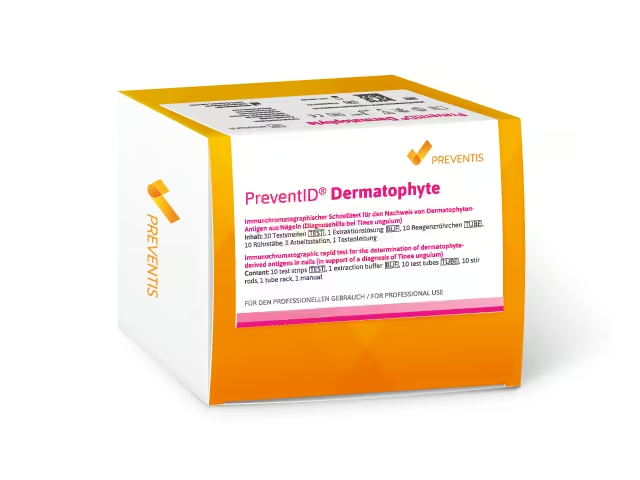
Elland Foot Clinic now provides an effective diagnosis for fungal nails which can be completed in the clinic, with results in just 5 minutes. It detects 99% of all common dermatophytes with only a 1mg specimen and can be without any additional equipment.
- Rapid and effective dermatophyte diagnostics
- A 97% accurate clinical test for fungal nail infection
- No need to send nail samples off to the lab and await results
Treatment depends on the individual, but includes the following:
- Regular podiatry appointments to drill, clean and tidy the nails.
- A course of oral terbinafine which is prescribed by your GP.
- Making sure tinea pedis (athlete’s foot) is treated swiftly as it can spread to the nails.
- Nail lacquers which can be bought over the counter. These can be effective if caught early.
- Nail fenestration which involves drilling small pathways into the nail plate. This then allows topical creams/lacquers to reach the infection under the nail plate.
Accurate Diagnosis
Before treatment, we will diagnose the nail condition by:
- Examining the nail
- We may take a nail clipping or scraping for lab testing
- Most cases can be diagnosed there and then by assessing

Treatment Options
Topical Antifungal Medications
Used for mild to moderate infections.
- Prescription-strength lacquers or solutions (amorolfine)
- Applied daily or weekly depending on the medication
- Works best when the nail is regularly thinned to improve penetration
Oral Antifungal Medications
Used for more severe or widespread infections.
- Common options: terbinafine
- Taken for 3 – 6 months in most cases
- These are more effective than topical treatments, but require bloodwork in some patients to monitor liver health.
Mechanical Debridement
Podiatrists can:
- Trim and thin thickened nails
- Use drills or manual tools to remove diseased nail
- This reduces pain and helps medications reach the fungus better.
Nail Fenestration
Nail fenestration is a podiatry procedure where tiny holes are made in a thick, fungus-infected toenail to help the antifungal medications penetrate more effectively.
Think of it as creating small ‘pathways’ in the nail plate.
Why is it done?
Fungal nails often become:
- Thick
- Hard
- Brittle
These changes prevent topical medications from reaching the fungus under or within the nail. Fenestration increases medication absorption dramatically.
How the procedure works
A podiatrist typically:
- Cleans and thins the nail first.
- Uses a special drill, burr, or micro-punch to create multiple tiny, painless holes in the nail.
- Applies topical antifungal medication immediately after the holes are created.
The holes are:
- Very small
- Painless (because the nail has no nerves)
- Usually invisible once medication is applied
Benefits of nail fenestration
- Improves effectiveness of topical treatments
- Can reduce nail thickness and pressure on the toe
- Minimally invasive
- No downtime — you can walk right away
- Good alternative for people who cannot take oral antifungal medication
Risks or considerations
- The holes can close over time as the nail grows
- Requires clean technique to reduce infection risk
- Works best when performed by a podiatrist, not DIY
- May need repeat sessions depending on nail growth rate and severity
Nail Removal (Partial or Total)
For severe, painful, or recurring infections:
- Temporary removal allows direct application of antifungals to the nail bed
- Permanent removal is rare but can be done for chronic, resistant cases
Prevention and Aftercare
Podiatrists also teach strategies to avoid reinfection:
- Keep feet dry, change socks daily
- Use antifungal sprays or powders in shoes
- Disinfect or replace old footwear
- Avoid going barefoot in communal wet areas
- Maintain regular nail trimming