
Service
Nail Surgery
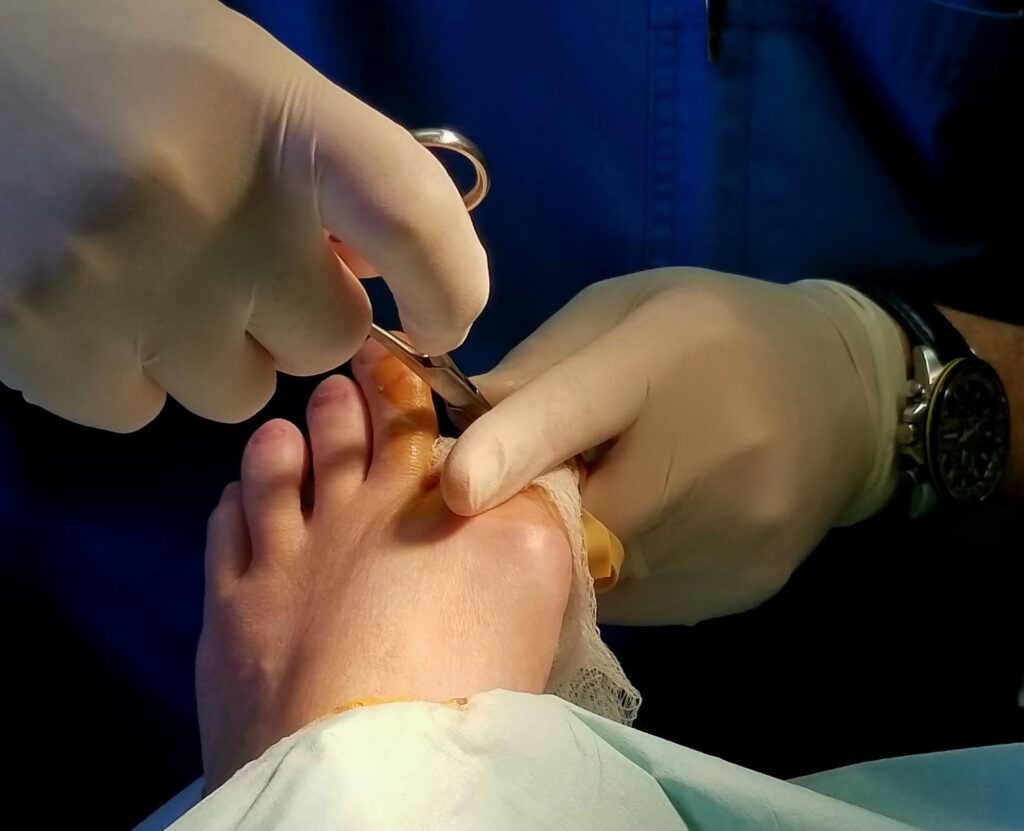
Nail surgery is a minor surgical procedure performed to treat chronic or recurring ingrowing toenails, most commonly ingrown toenails (onychocryptosis) or damaged/infected nails. The procedure is done under local anesthesia in the clinic.
The most common types of nail surgery include:
- Partial Nail Avulsion (PNA)Removal of only the affected portion of the nail.
- Total Nail Avulsion (TNA)Complete removal of the entire nail plate.
- Chemical MatricectomyApplication of a chemical agent (usually phenol or sodium hydroxide) to destroy part or all of the nail matrix to prevent regrowth of the problematic nail.
When should I have nail surgery?
Nail surgery is often recommended in the following situation:
- You suffer from recurrent ingrown toenails that do not respond to conservative care.
- There is infection present.
- You are experiencing persistent pain, swelling, or difficulty walking.
- You have a dystrophic, damaged nail.
- By removing the problematic part of the nail, we preserve the rest of the healthy nail.
Why should I have nail surgery at the Elland Foot Clinic?
- Highly experienced nail surgery expert
- No waiting times - you can often have it done within a week
- NHS waiting times can be extremely long - months to years
- Almost instant relief. There may be tenderness for a few days
- You can go to work next day
When is nail surgery performed?
It is commonly performed to treat the following:
- Ingrown toenails also known as onychocryptosis (the most common reason)
- Thickened or deformed nails causing discomfort
- Fungal nail infection (onychomycosis) that does not respond to medication or treatments
- Damaged nails (such as trauma or recurrent infections)
- Nail tumours or cysts (although this is less common)
What are the risks associated with nail surgery?
Nail surgery is a safe and effective treatment, but like all procedures they carry very small risks.
Here’s a list of the most common risks/complications:
- Postoperative infection. This can be managed by the podiatrist with a course of antibiotics.
- Phenol flare which will cause your toe to look extremely red and tender for a few weeks. This is not serious and will settle down as the toe begins to heal.
- Anaphylaxis due to the administration of the local anaesthetic. This is extremely rare and can be treated with adrenaline supplied by the podiatrist.
- Prolonged pins and needles, numbness, shooting pains in the toe. This is called neuropraxia and is caused by nerve irritation from the injection. It’s very rare and settles down after 2-3 months.
- Nail surgery is highly successful, but in a handful of cases (5%-10%) regrowth can occur. Some people are resistant to the chemical used (phenol) and you may need the procedure doing a second time.
- Delayed healing can occur in certain individuals who may have compromised circulation or take certain medications for other health conditions.
When should I have nail surgery?
Nail surgery is often recommended in the following situation:
- You suffer from recurrent ingrown toenails that do not respond to conservative care.
- There is infection present.
- You are experiencing persistent pain, swelling, or difficulty walking.
- You have a dystrophic, damaged nail.
- By removing the problematic part of the nail, we preserve the rest of the healthy nail.
Why should I have nail surgery at the Elland Foot Clinic?
- ConsultationThis is the opportunity to explain your symptoms or foot pain with the podiatrist.
- AssessmentWe will assess your feet and recommend the most effective treatment for your specific needs.
- TreatmentTreatment may be provided on the day depending on your individual requirements.
- PlanWe will establish the best care plan to resolve your issues or maintain overall foot health.
- Continuous SupportWe can provide regular foot care to keep you healthy, active and pain free.