
Corn & Callus Treatment in Halifax & Elland | Elland Foot Clinic
Corns and calluses are common skin conditions caused by repeated pressure and friction on the feet. Although they are often considered minor problems, painful areas of hard skin can significantly affect comfort, walking and
footwear tolerance. At Elland Foot Clinic, we provide professional corn and callus treatment for patients throughout Elland, Halifax and Calderdale using safe and effective podiatry techniques.
Condition
What Are Corns and Calluses?
Corns and calluses develop when the skin thickens in response to excessive pressure or friction. A corn is usually a small, concentrated area of hard skin with a central core that may press into deeper tissues and become painful.
A callus is generally a broader area of thickened skin that develops over weight-bearing or high-friction areas of the foot.
Common Areas Corns and Calluses Develop
Corns and calluses may commonly appear:
- On the ball of the foot
- Underneath prominent joints
- On the tops or sides of toes
- Between the toes
- Around areas of footwear pressure
- Along weight-bearing areas of the heel
Common Symptoms of Corns and Calluses
- Thickened or hardened skin
- Pain during walking
- Tenderness over pressure points
- Discomfort in footwear
- Rough or dry skin texture
- Feeling as though walking on a stone
- Localised pressure pain
What Causes Corns and Calluses?
The feet respond to excessive pressure by producing thicker skin as a protective mechanism. Common contributing factors include:
- Tight or poorly fitting footwear
- Foot deformities such as bunions or hammer toes
- Prominent joints or bones
- Abnormal walking mechanics
- High-pressure areas beneath the foot
- Increased activity levels
- Reduced fat padding beneath the foot
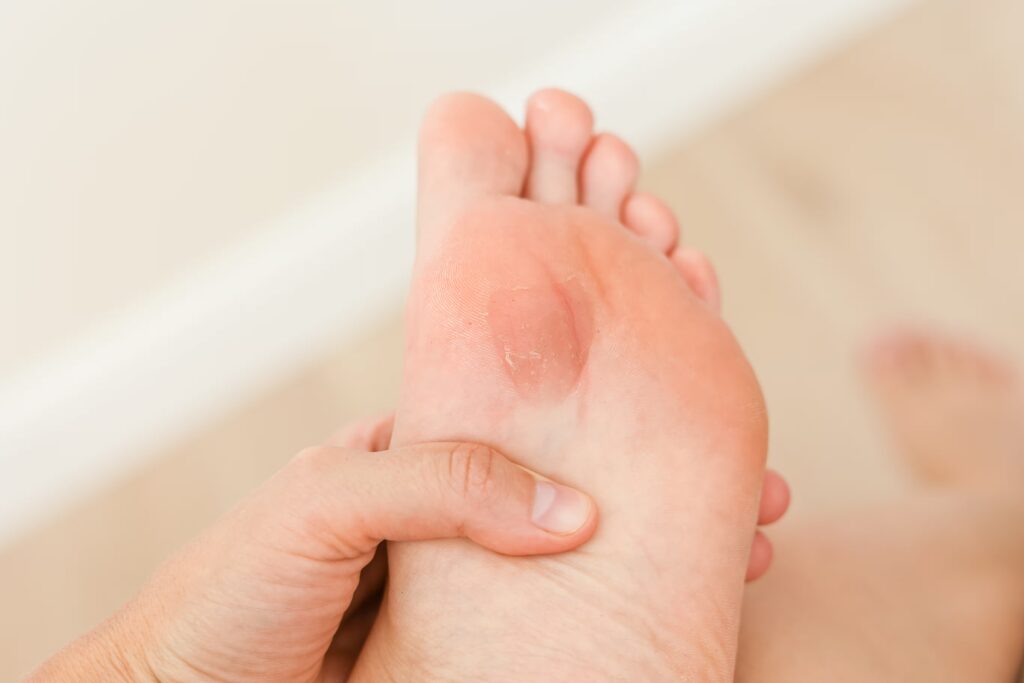
Why Do Corns Become Painful?
Corns often develop a dense central core that presses into the deeper layers of skin during walking. Increased pressure may irritate surrounding tissues and create sharp discomfort, particularly when standing or walking for prolonged periods.
How Are Corns and Calluses Diagnosed?
At Elland Foot Clinic, diagnosis involves clinical assessment of the skin and identification of the underlying pressure source. Assessment may include:
- Examination of hard skin distribution
- Identification of pressure points
- Gait and biomechanical assessment
- Footwear evaluation
- Assessment of foot deformities
Treatment Options for Corns and Calluses
Treatment focuses on reducing pressure and improving foot comfort. Management may include:
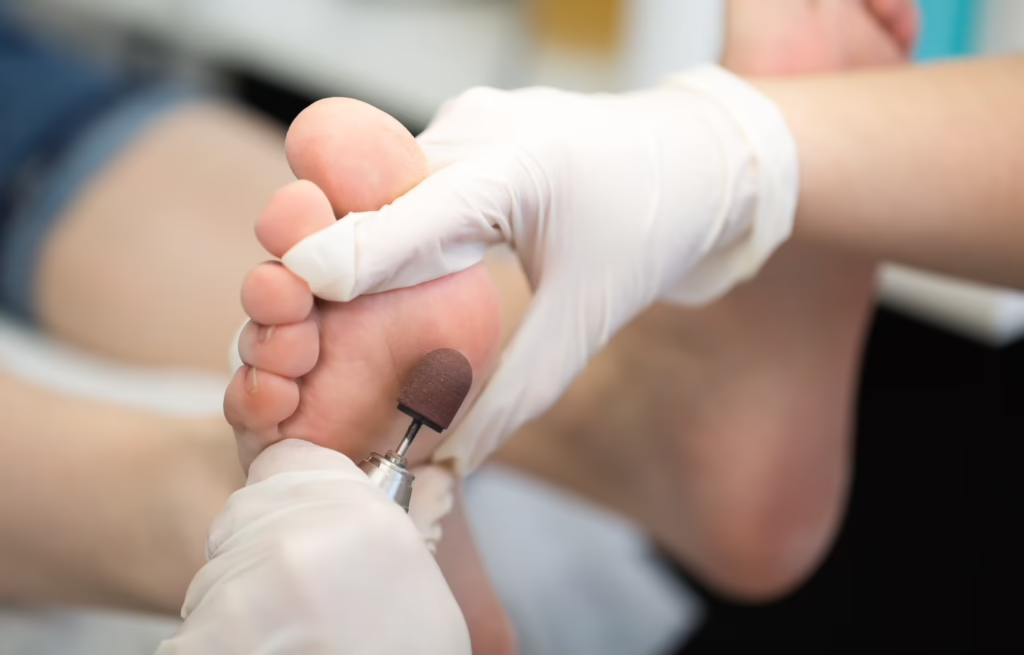
- Professional removal of hard skin
- Corn reduction and enucleation
- Pressure redistribution techniques
- Footwear advice
- Orthotics and insoles where appropriate
- Padding and protective devices
- Moisturising and skin care advice
Why Footwear Matters
Footwear plays a major role in the development of pressure lesions. Tight shoes, narrow toe boxes and inadequate cushioning may increase friction and localised pressure on the skin. Appropriate footwear may help reduce recurrence significantly.
Can Corns and Calluses Return?
Yes. Corns and calluses often recur if the underlying mechanical pressure remains unchanged. Long-term management may involve:
- Footwear modification
- Pressure redistribution
- Orthotic support
- Regular podiatry treatment
- Ongoing skin care
When Should You See a Podiatrist?
Professional assessment is recommended if:
- Hard skin becomes painful
- Walking is uncomfortable
- Home treatment is not helping
- Corns continue to return
- You have diabetes or circulation problems
- You are unsure whether the lesion is a corn or verruca
Frequently Asked Questions
Are corns and verrucas the same?
No. Corns are pressure-related lesions, whereas verrucas are caused by a viral infection.
Why do corns hurt so much?
The central core of a corn may press deeply into the skin during walking.
Can footwear cause calluses?
Yes. Poorly fitting footwear commonly contributes to increased pressure and friction.
Should I cut corns myself?
No. Self-treatment may increase the risk of injury or infection, particularly in patients with diabetes or poor circulation.
Can orthotics help reduce recurrence?
Orthotics may help redistribute pressure and reduce excessive loading beneath the foot.