
Fungal Nail Infection Treatment in Halifax & Elland | Elland Foot Clinic
Fungal nail infections are a common condition affecting the toenails and may cause thickening, discolouration and changes to the nail structure. The infection often develops gradually and can become increasingly difficult to
manage if left untreated. At Elland Foot Clinic, we provide professional fungal nail assessment and treatment
advice for patients across Elland, Halifax and Calderdale.
Condition
What Is a Fungal Nail Infection?
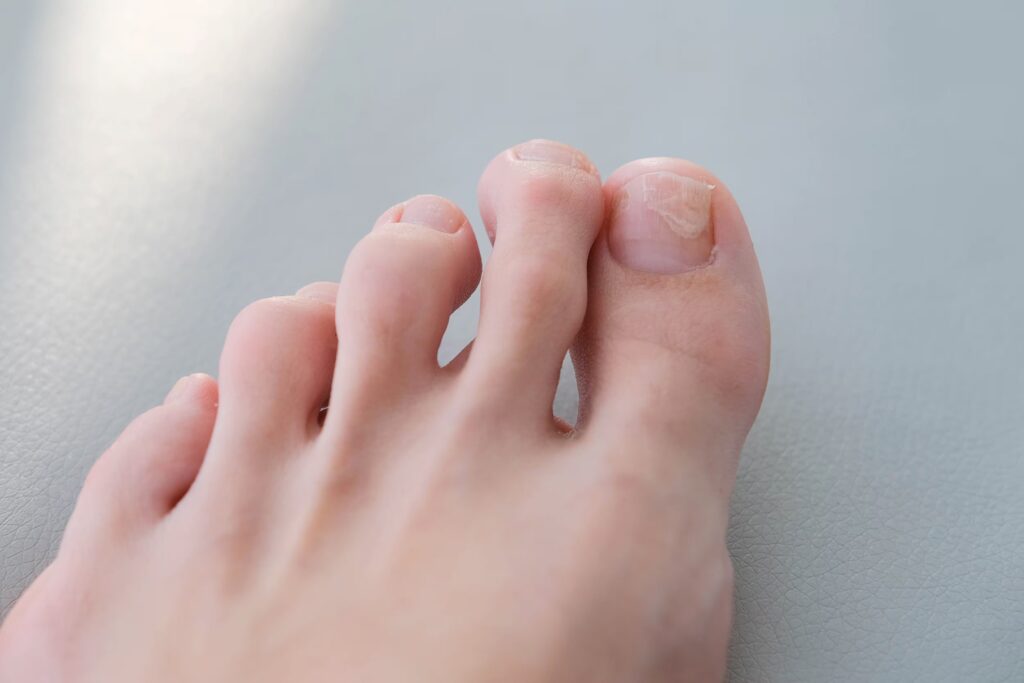
A fungal nail infection, also known as onychomycosis, occurs when fungal organisms invade the nail plate or nail bed. The infection may affect one or multiple toenails and commonly causes progressive changes in colour, texture and thickness. Fungal infections often develop slowly and may spread over time if conditions remain favourable for fungal growth.
Common Signs of Fungal Toenails
- Yellow, white or brown nail discolouration
- Thickened toenails
- Brittle or crumbly nail texture
- Distorted nail shape
- Nails lifting away from the nail bed
- Difficulty cutting the nails
- Pressure discomfort within footwear
What Causes Fungal Nail Infections?
Fungal organisms thrive in warm, moist environments and may enter the nail through small areas of damage or separation. Common contributing factors include:
- Sweaty feet
- Repeated nail trauma
- Tight footwear
- Athlete’s foot infections
- Communal changing areas
- Nail damage from sport or running
- Reduced circulation
- Increasing age
Why Do Fungal Nails Become Thick?
As fungal organisms spread within the nail structure, the nail may respond by becoming increasingly thickened and distorted. Thickened nails may create:
- Difficulty wearing shoes comfortably
- Increased pressure on surrounding toes
- Problems trimming the nails safely
- Build-up of debris beneath the nail
How Are Fungal Nail Infections Diagnosed?
At Elland Foot Clinic, diagnosis is based on clinical assessment of the nail appearance and associated symptoms.
Assessment may include:
- Examination of nail colour and texture
- Assessment of nail thickness and distortion
- Identification of possible athlete’s foot involvement
- Evaluation of pressure areas within footwear
- Differentiation from trauma-related nail changes or psoriasis

Treatment Options for Fungal Nail Infections
Treatment recommendations vary depending on the severity and duration of infection. Management may include:
- Professional nail reduction and debridement
- Advice regarding topical antifungal treatments
- Foot hygiene guidance
- Footwear recommendations
- Reduction of pressure from thickened nails
- Advice regarding prevention of reinfection
Why Professional Nail Reduction Can Help
Thickened fungal nails may become difficult to manage safely at home. Professional nail reduction may help:
- Improve comfort in footwear
- Reduce pressure on surrounding tissues
- Improve the appearance of the nail
- Enhance penetration of topical treatments
- Reduce build-up of fungal debris
How Can Fungal Nail Infections Be Prevented?
Preventative strategies may help reduce recurrence and spread of fungal infection. Advice commonly includes:
- Keeping feet dry
- Changing socks regularly
- Wearing breathable footwear
- Avoiding barefoot walking in communal areas
- Treating associated athlete’s foot promptly
- Disinfecting footwear where appropriate
When Should You See a Podiatrist?
Professional assessment is recommended if:
- Nails become increasingly thick or painful
- Walking becomes uncomfortable
- You are unable to manage the nails safely
- Discolouration is spreading
- Home treatments are not effective
- You have diabetes or circulation problems
In some cases, the nail may become painful due to pressure from footwear.
Frequently Asked Questions
Can fungal nail infections spread?
Yes. Fungal infections may spread to other nails or surrounding skin if left untreated.
Why are fungal nails difficult to treat?
Toenails grow slowly, meaning treatment and nail recovery may take many months.
Can fungal nails become painful?
Thickened nails may create pressure discomfort inside footwear.
Is every thickened nail fungal?
No. Trauma, psoriasis and other conditions may also affect nail appearance.
Should fungal nails be professionally managed?
Professional assessment may help improve comfort and guide appropriate treatment options.