
Verruca Treatment in Halifax & Elland | Elland Foot Clinic
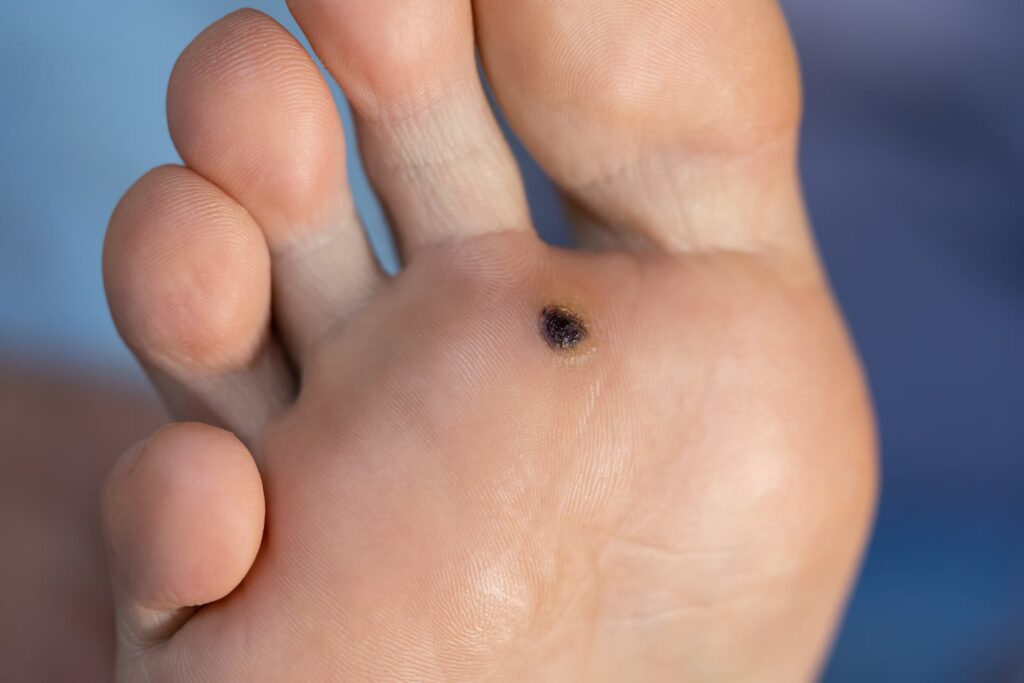
Verruca’s are a common viral skin condition affecting the feet and are caused by the human papilloma virus (HPV). They may appear as rough lesions on weight-bearing areas of the foot and can sometimes become painful during walking or standing. At Elland Foot Clinic, we provide professional verruca assessment and evidence-based treatment options for patients across Elland, Halifax and Calderdale.
Condition
What Is a Verruca?
A verruca is a viral infection affecting the outer layers of skin on the foot. The virus enters through tiny breaks in the skin and may cause localised thickened lesions to develop. Verruca’s commonly form on pressure areas such as the heel or ball of the foot and may appear flattened due to body weight pressing them inward during walking.
How Do Verruca's Differ From Corns?
Achilles tendinopathy is commonly divided into two main categories:
- Small black dots within the lesion
- Disruption of natural skin lines
- Pain when squeezed from the sides
- Cluster formation in some cases
Corns are pressure-related skin lesions rather than viral infections.
Common Symptoms of Verrucas
- Rough or thickened skin lesions
- Pain when walking or standing
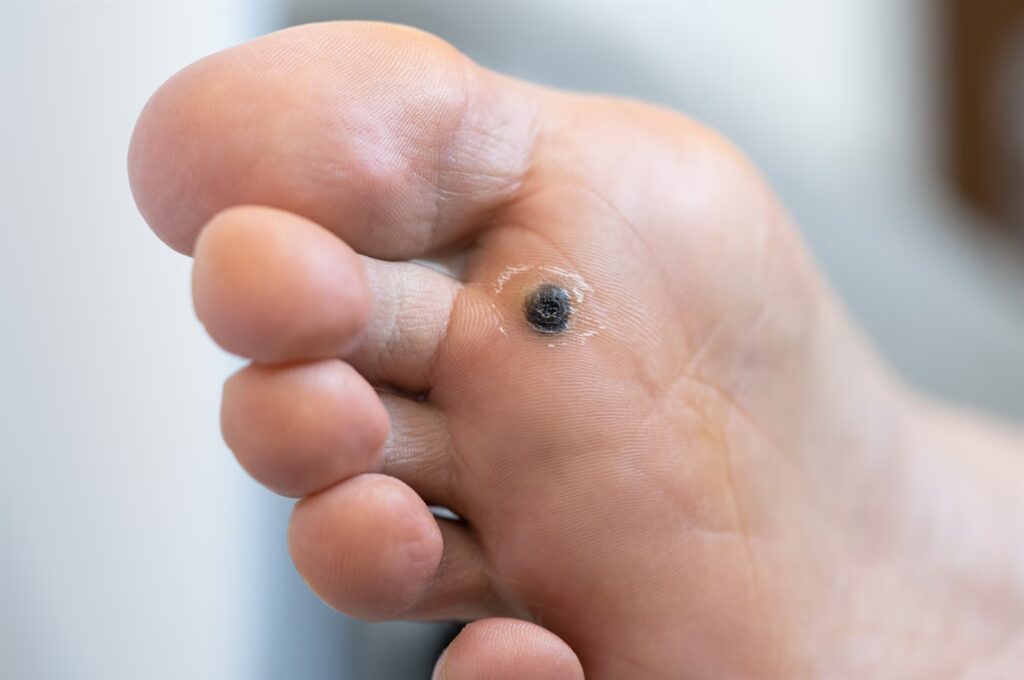
- Small black dots within the skin
- Tenderness on pressure
- Lesions developing in clusters
- Changes in normal skin texture
- Discomfort during sport or activity
How Do Verruca’s Spread?
Verruca’s are contagious and may spread through direct skin contact or contaminated surfaces. The virus is commonly associated with:
- Swimming pool environments
- Communal changing rooms
- Shared showers
- Gyms and sports facilities
Not everyone exposed to the virus will develop verruca’s, as immune response plays an important role.
Why Do Some Verrucas Become Painful?
Verruca’s located on weight-bearing areas may become painful because body weight pushes the lesion deeper into the skin during walking. Pressure from standing, exercise and footwear may increase irritation, particularly if hard skin develops over the lesion.
How Are Verruca's Diagnosed?
At Elland Foot Clinic, verrucae are diagnosed through clinical examination and assessment of skin characteristics.
Assessment may include:
- Examination of lesion appearance
- Identification of black pinpoint blood vessels
- Assessment of pain patterns
- Evaluation of surrounding skin
- Differentiation from corns, calluses or other skin lesions Accurate diagnosis is important because several skin conditions may resemble verruca’s.
Verruca Treatment Options
Treatment recommendations depend on the size, location and duration of the verruca, along with patient symptoms and medical history. Management options may include:
- Verruca needling
- Acid-based treatments
- Debridement of overlying hard skin
- Pressure offloading techniques
- Home treatment guidance
- Monitoring and conservative management Some verruca’s resolve naturally over time, whilst others may persist for years without treatment.
What Is Verruca Needling?
Verruca needling is an advanced treatment procedure designed to stimulate the body’s immune response against the virus. The treatment is carried out under local anaesthetic and involves puncturing the verruca tissue with a sterile needle. This may help expose viral particles to the immune system more effectively. Verruca needling is often considered for stubborn or longstanding verruca’s.
When Should You See a Podiatrist?
Professional assessment is recommended if:
- The verruca becomes painful
- Walking is uncomfortable
- Home treatments are not helping
- The lesion is spreading
- You are unsure whether it is a verruca
- You have diabetes or poor circulation
Why Choose Elland Foot Clinic?
At Elland Foot Clinic, we provide professional verruca assessment and treatment using evidence-based podiatry care.
- HCPC Registered Podiatrist
- Verruca needling available
- Individual treatment planning
- Friendly and professional service
Nick Mainds is HCPC registered (CH33550) and provides podiatry treatment for patients throughout Halifax, Elland and Calderdale.
Frequently Asked Questions
Can verruca’s disappear naturally?
Yes. Some verruca’s resolve naturally as the immune system recognises the virus, although this may take months or years.
Are verruca’s contagious?
Yes. Verruca’s are caused by HPV and may spread through contaminated surfaces or direct contact.
Is verruca needling painful?
The procedure is carried out under local anaesthetic to improve comfort during treatment.