
Hallux Limitus & Hallux Rigidus Treatment in Halifax & Elland | Elland Foot Clinic
Hallux limitus and hallux rigidus are conditions affecting movement of the big toe joint. These conditions may cause pain, stiffness and difficulty bending the toe during walking, particularly during push-off movement. At Elland Foot Clinic, we provide detailed assessment and treatment for big toe joint pain and arthritic foot conditions for patients throughout Elland, Halifax and Calderdale.
Condition
What Are Hallux Limitus and Hallux Rigidus?
The big toe joint plays an important role in walking, balance and propulsion. Hallux limitus refers to reduced movement within the first metatarsophalangeal joint, particularly when bending the toe upward. Hallux rigidus represents a more advanced stage where the joint becomes increasingly stiff and arthritic, significantly restricting motion and causing pain during walking.
How Do These Conditions Affect Walking?
During normal walking, the big toe bends upward as the body moves forward over the foot. When movement becomes restricted:
- Increased stress may develop around the joint
- Walking mechanics may become altered
- Pressure may shift to other parts of the foot
- Compensatory gait patterns may develop
Common Symptoms of Hallux Limitus & Hallux Rigidus
- Pain within the big toe joint
- Stiffness during walking
- Reduced upward movement of the toe
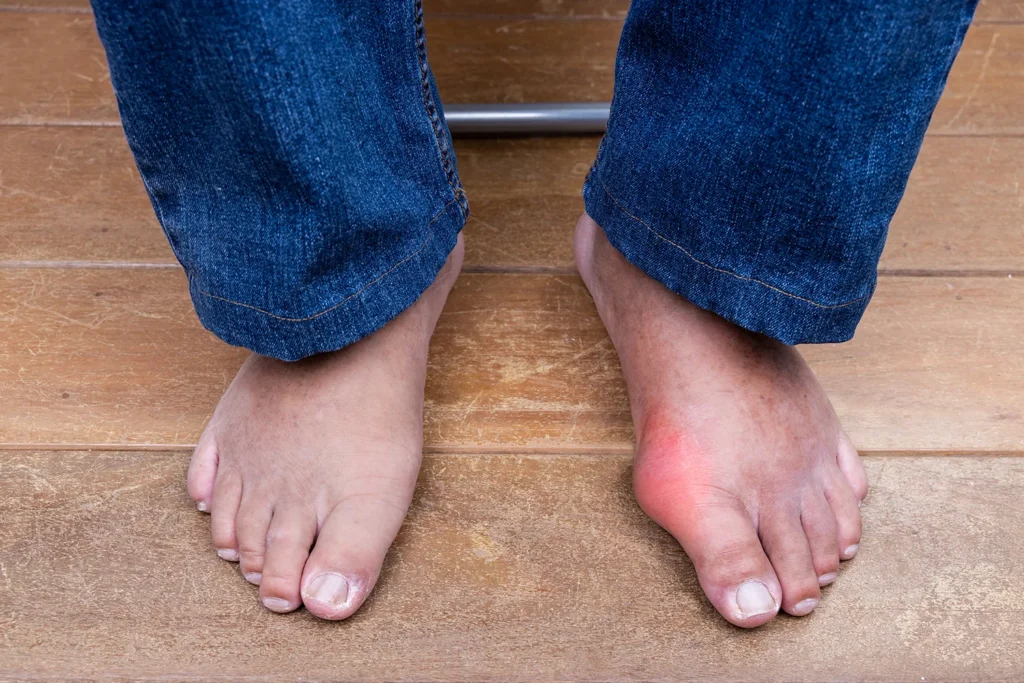
- Swelling around the joint
- Difficulty wearing certain footwear
- Pain during push-off movement
- Bony enlargement on the top of the joint
What Causes Hallux Limitus & Hallux Rigidus?
Several factors may contribute to degeneration and stiffness within the big toe joint, including:
- Osteoarthritis
- Previous joint injury or trauma
- Abnormal foot mechanics
- Elevated first metatarsal position
- Repetitive stress through the joint
- Genetic predisposition
- Long-term joint overload
Why Does the Joint Become Stiff?
Degeneration of the joint cartilage may reduce smooth movement within the joint. Over time, the body may form extra bone around the joint margins, known as osteophytes or bone spurs. These bony changes may further restrict movement and contribute to pain and inflammation.
How Are Hallux Limitus & Hallux Rigidus Diagnosed?
At Elland Foot Clinic, assessment focuses on evaluating joint movement, walking mechanics and pressure distribution. Assessment may include:
- Examination of big toe range of motion
- Gait analysis
- Assessment of joint stiffness and swelling
- Evaluation of pressure beneath the foot
- Footwear assessment
- Identification of compensatory movement patterns
Treatment Options for Hallux Limitus & Hallux Rigidus
Treatment aims to reduce painful joint motion and improve walking comfort. Management may include:
- Footwear advice
- Steroid injection
- Stiff-soled or rocker-soled footwear recommendations
- Orthotics to improve foot mechanics
- Pressure redistribution techniques
- Activity modification advice
- Joint offloading strategies
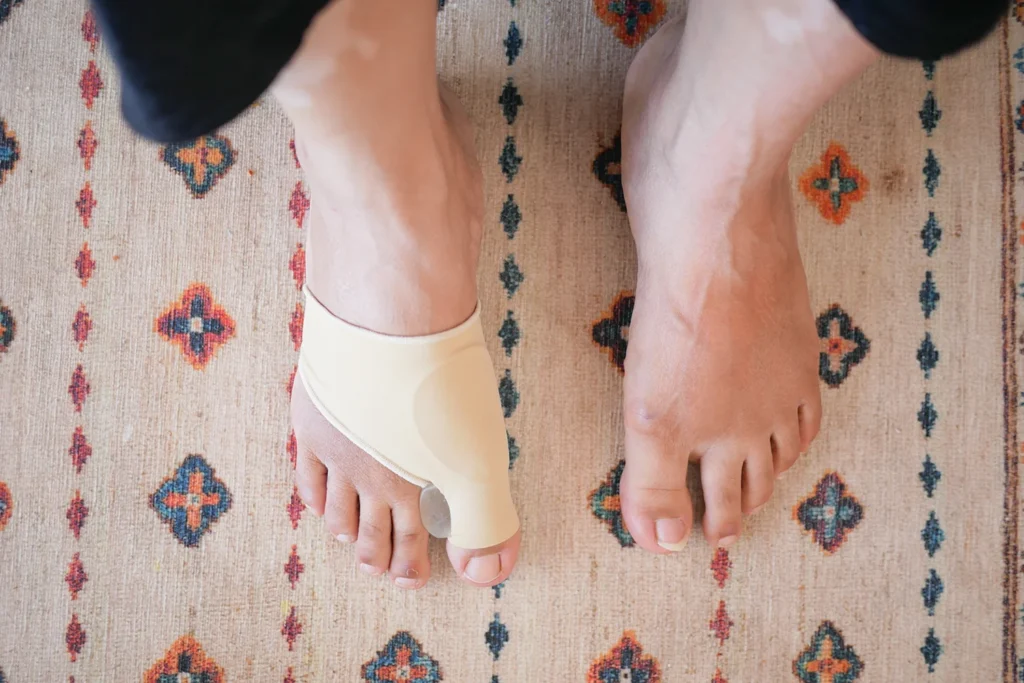
- Padding and cushioning where appropriate
Why Footwear Plays an Important Role
Flexible footwear may increase bending forces through the arthritic joint during walking. Footwear with:
- Stiffer soles
- Rocker-bottom designs
- Adequate forefoot depth
- Reduced pressure across the joint may help reduce pain during movement.
Can Hallux Limitus Progress Into Hallux Rigidus?
Yes. Reduced joint movement may gradually worsen over time as arthritic degeneration progresses. Early management may help:
- Improve walking comfort
- Reduce excessive joint stress
- Slow progression of stiffness
- Improve footwear tolerance
When Should You See a Podiatrist?
Professional assessment is recommended if:
- Big toe pain persists during walking
- Joint stiffness increases over time
- Push-off movement becomes painful
- Swelling develops around the joint
- Walking patterns change because of pain
- Footwear becomes uncomfortable
Frequently Asked Questions
What is the difference between hallux limitus and hallux rigidus?
Hallux limitus refers to reduced joint movement, whereas hallux rigidus describes more advanced stiffness and arthritic degeneration.
Can orthotics help big toe joint pain?
Orthotics may help reduce stress through the first metatarsophalangeal joint during walking.
Why does my big toe hurt when walking?
Restricted joint movement and arthritic changes may increase pressure during push-off movement.
Can footwear improve symptoms?
Yes. Supportive footwear with stiffer soles may reduce painful joint movement.
Should big toe stiffness be professionally assessed?
Persistent stiffness and pain may indicate progressive joint degeneration requiring assessment.