
Plantar Plate Treatment in Halifax & Elland | Elland Foot Clinic
A plantar plate injury is one of the most frequently overlooked causes of pain beneath the ball of the foot. The condition commonly affects the 2nd metatarsophalangeal joint causing discomfort, swelling, instability and gradual changes in toe position. Many patients describe the sensation as walking on a pebble or having something trapped under their foot.
Condition
What Is the Plantar Plate?
The plantar plate is a thick fibrocartilaginous ligament beneath the metatarsophalangeal joints. It stabilises the toes, prevents excessive upward movement, distributes forces across the forefoot and helps maintain normal toe alignment. It also engages with the plantar fascia during walking.
What Is a Plantar Plate Injury?
A plantar plate injury occurs when the ligament becomes stretched, weakened or torn due to excessive mechanical stress. Without treatment, the affected toe may gradually drift upward or sideways, causing instability and deformity.
Why Is the Second Toe Most Commonly Affected?
The second toe is most commonly affected if you have a longer 2nd metatarsal bone or if your big toe joint has a condition limiting its function.
Common Symptoms
- Pain on the ball of your foot
- Swelling around the toe 2nd toe
- Feeling like you’re walking on a pebble
- Drifting toes (Churchill sign)
- Instability in the toe joint
Common Causes
- A condition affecting the big toe joint (bunion, arthritis, functional hallux limitus)
- High impact activities such as dancing or gymnastics
- Forefoot runners
- Tight calves as the forefoot makes ground contact prematurely
Diagnosis
- History taking is important
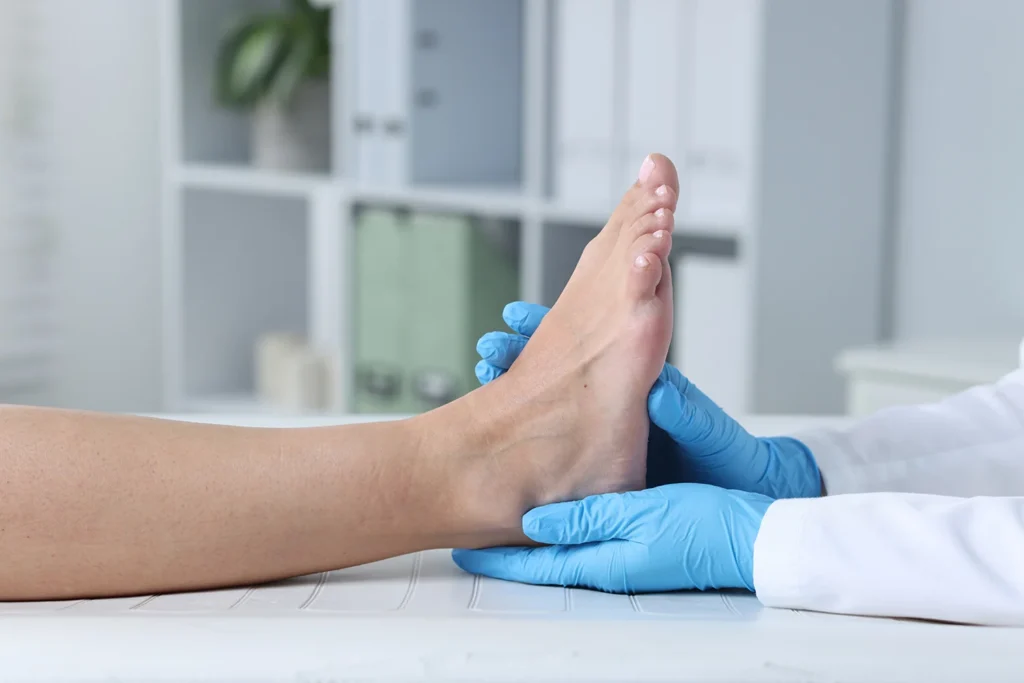
- Physical examination of the toes
- Lachman’s test
- Imaging (if appropriate)
Treatment Options
- Orthoses with a met dome behind the toe
- Rigid rockerbottom shoes/trainers
- Taping/strapping to prevent dorsiflexion of the toe
- Progressive exercise and rehabilitation
What Happens If Left Untreated?
Untreated plantar plate injuries will progress to severe toe deformities, instability and chronic pain.